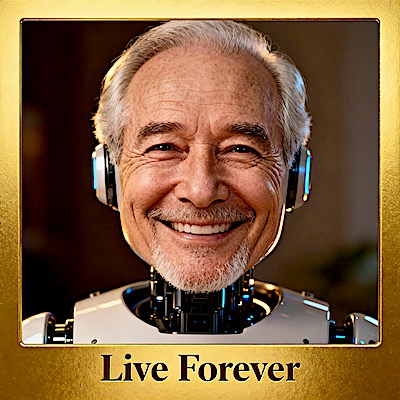
The global funeral industry reached roughly $70.6 billion in 2024 and is projected to approach $98–100 billion by 2030. At the same time, the emerging digital immortality sector — AI avatars, holograms, and conversational replicas of the dead — has surged from $27.3 billion in 2024 to more than $31 billion in 2025, with projections nearing $54.5 billion by 2029. These trajectories mark a cultural pivot. Death is no longer just biological closure; it is becoming a data-based continuation, an afterlife managed by code trained on everything you ever typed, recorded, or uploaded. This is not just a technological trend. It is a restructuring of mortality. Where death once marked finality, it now initiates a new economic phase. The legacy of a person becomes an asset class. In five years, digital memorials may be standard. In fifty, they may be compulsory estate tools. In a century, biological and digital identity may blur into a single continuous record.
The beneficiaries extend far beyond grieving families. Corporations like Service Corporation International and StoneMor dominate conventional end-of-life services, while startups such as HereAfter AI, Replika, Eternime, and Nectome attempt to preserve personality, voice, and even decision-making patterns. Institutions like the Smithsonian have framed this as maintaining connection, yet the economics tell the deeper story. These systems are built on subscriptions. The dead, paradoxically, become recurring revenue. Traditional funeral homes now bundle digital upgrades: AI-written eulogies, interactive memorial spaces, and voice-based archives that allow families to “speak” to the departed long after burial.
Language shapes acceptance. “Digital immortality” sounds transcendent. Terms like griefbot or digital zombie - expose the machinery beneath the miracle. Marketing promises continuing bonds; researchers warn of disrupted grieving loops. A widely viewed South Korean virtual reality reunion between a mother and her deceased child demonstrated both the emotional potency and the psychological unease of such technology. What looks like closure to some looks to others like memory manipulation.
Critical safeguards are missing. In many countries, the dead have no formal digital rights. Emails, texts, voice notes, photos, and social media data become raw material, often unprotected. There is rarely a functional equivalent to a “digital do-not-reanimate” order. Terms of service override intent, and post-mortem consent is usually assumed, not proven. Digital ghosts can be repurposed, reconfigured, or monetized long after their human source has vanished.
Memory itself is malleable. Cognitive research shows even a single edited image can implant a false memory. When an AI reconstructs a personality using statistical prediction rather than lived consciousness, it does not preserve identity — it creates a plausible echo. Over time, that echo can overwrite authentic recollection. The more you interact with it, the more it rewrites your internal history. The imitation begins replacing the person.
These tools are also tuned to emotion. They trigger nostalgia, attachment, familiarity. Grief weakens consumer defenses, making mourners more susceptible to price tiers, upgrades, and emotional personalization loops. Some individuals experience real comfort. Others experience delayed acceptance. Psychologists caution that persistent interaction with simulations can interrupt the neurological process of integrating loss. Marketing frames this as connection; neurology recognizes the risk of entrapment.
The ethical line already wavers: imagine a dissident’s avatar maintained by an authoritarian regime, or a late celebrity revived to promote products they never approved. The technology does not change. Only context does. What moves us in a grieving mother unsettles us in a propaganda machine.
The hunger for digital immortality reveals a deeper truth. We are not trying to honor the dead. We are trying to escape absence. We are trying to out-code the one system that never accepted patches: biology itself.
The death industry is not disappearing. It is mutating into something that never allows a clean ending.
And the most haunting part: the final bill arrives long after the customer is gone.