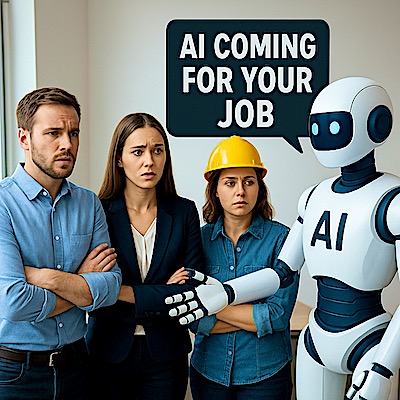
Artificial intelligence is not creeping forward — it’s compounding. Each breakthrough trains the next one. As compute power, data availability, and model architecture accelerate, the pace of job disruption will not be linear. It will be lumpy, uneven, and brutally efficient. Here is a grounded, evidence-based timeline of which specific jobs are most likely to be replaced or radically reduced by AI — and when — based on current research, adoption trends, and real-world implementation. 2025–2027: The Administrative Collapse These roles are already being automated at scale in corporate, healthcare, and government systems. Most of the required tools already exist. High probability of major reduction:
• Data entry clerks
• Medical transcriptionists
• Scheduling coordinators
• Accounts payable/receivable clerks
• Payroll processors
• Typists / document processors
• Claims processors (insurance)
• Appointment schedulers McKinsey Global Institute estimates 30% of tasks in 60% of jobs are already automatable using existing technology, with office support functions among the most exposed. MIT research (Iceberg Index simulation) shows AI can already perform 11.7% of current U.S. job tasks today — concentrated heavily in clerical and administrative work. These jobs are not “coming” for AI. They are already going. 2026–2029: The Customer Service & Content Layer As large language models become more conversational, emotionally adaptive, and integrated with CRMs, these roles begin disappearing rapidly. High risk roles:
• Call center agents
• Tier-1 technical support reps
• Telemarketers
• Basic copywriters
• Content moderators
• Proofreaders
• Social media managers (basic posting/response) IBM estimates that AI could replace or significantly change nearly 30% of customer service roles by 2028:
This doesn’t mean zero humans. It means far fewer — supervising instead of performing. 2028–2035: The Collapse of “Safe” White Collar Work This is the phase that surprises people. Middle-class cognitive work — once thought resistant — becomes the most disrupted. At risk:
• Junior paralegals
• Loan officers
• Entry-level financial analysts
• Junior accountants
• Tax preparers
• HR analysts and recruiters
• Market research analysts AI doesn’t replace all accountants. It replaces 70% of what junior accountants used to do. 2030–2040: Physical Work Begins to Fold This requires advanced robotics + AI — but deployment is happening in warehouses, ports, and distribution networks now. High-risk physical roles:
• Warehouse pickers and packers
• Retail cashiers
• Food preparation workers (fast food)
• Truck drivers (long-haul)
• Factory line workers
• Toll booth operators Tesla, Amazon, Fanuc, and Boston Dynamics are already building automated labor platforms at scale. Morgan Stanley predicts autonomous trucking could displace up to 300,000 U.S. jobs by the mid-2030s: Most Resilient (For Now): • Nurses, surgeons, therapists
• Electricians, plumbers, carpenters
• Teachers, mentors, social workers
• High-level strategists, inventors, artists
• Specialized repair technicians
• Crisis response & law enforcement These rely on unpredictability, human trust, complex motor skills, or ethical judgment — areas AI struggles to fully emulate. But don’t get comfortable. AI won’t replace you. It will replace the version of you that doesn’t adapt. The Truth in One Line AI doesn’t steal jobs. It deletes tasks. Jobs die when they refuse to evolve. This isn’t a job apocalypse. It’s an intelligence arms race with your own future. And the only winning move… is to upgrade yourself before the machine does it for you.